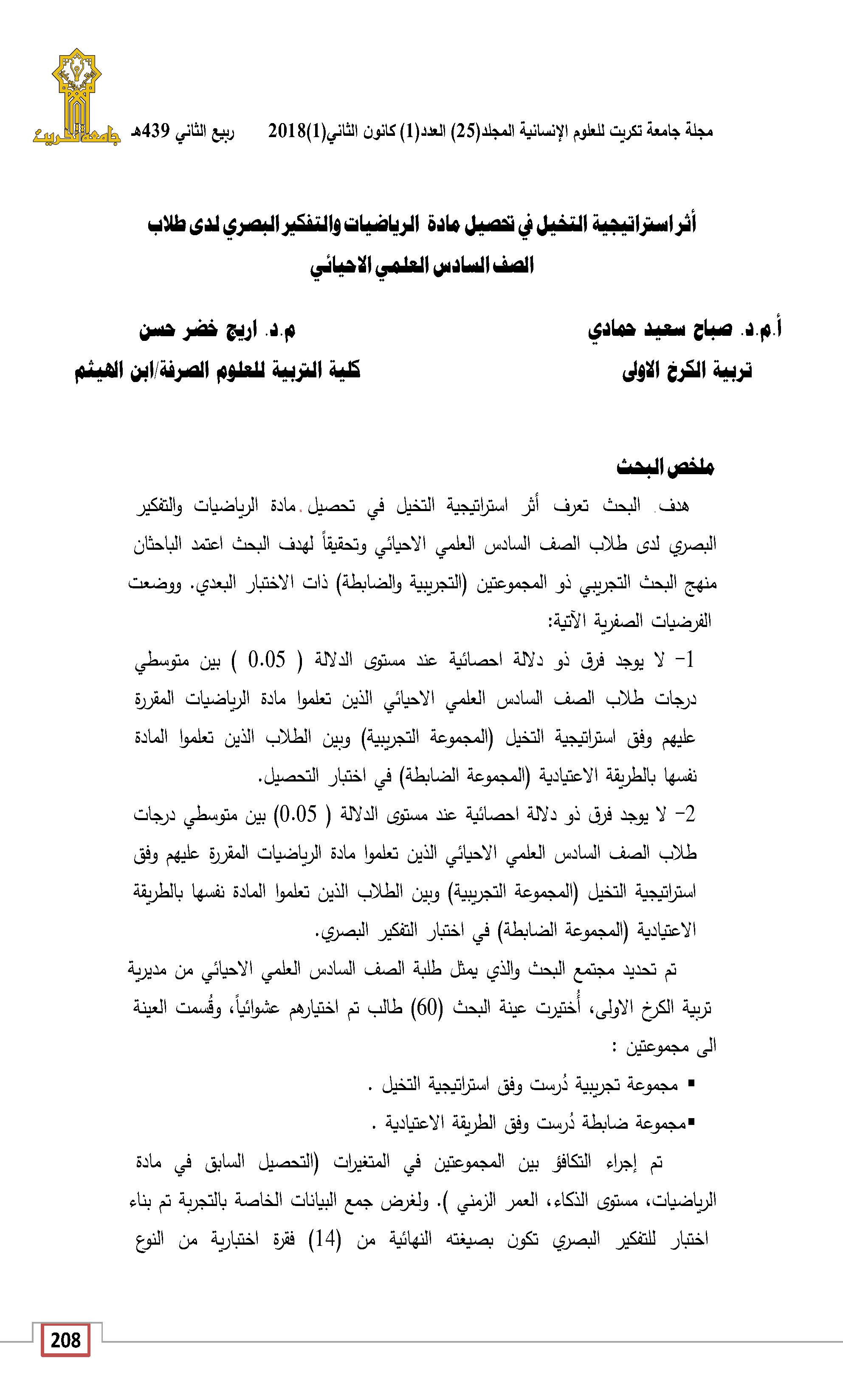
the effect of an imaginary strategy in an achievement of mathematics subject and visual thinking for sixth grade biological science secondary students
Article Sidebar
Main Article Content
Abstract
The goal of this research is to identify the effect of an imaginary strategy in an achievement of mathematics subject and visual thinking for sixth grade biological science secondary school students. To implement the research goal, the researchers adopted two group experimental research approach (experimental and control) with pre-test. The following zero hypotheses are developed: 1. There is no statistical difference at level 0.05 between the average scores of sixth grade biological science secondary school students who learned the mathematics subject according to the imaginary strategy (experimental group) among students who learned the same subject on the usual way (control group) in achievement test. 2. There is no statistical difference at level 0.05 between the average scores of sixth grade biological science secondary school students who learned the mathematics subject according to the imaginary strategy (experimental group) among students who learned the same subject on the usual way (control s group) in visual thinking test. The research community is identified with sixth grade from public directorate Al-Karkh1. 60 students are randomly elected s to be the research sample which is parted into two groups: - An experimental group which studied according to imaginary strategy. - A control group which studied according to usual way. The parity procedure is made between the groups with different variables (thepervious achievement of mathematics, intelligent scale, age). visual thinking test is structured to collect the data for the experiment.This test consists of 14 test items with subjective type. The achievement test consists s of 10 test items with essay type. proper statistical analysis is made to ensure s the syco-meterics proprieties of the test. The results show the superiority of the experimental group who studied according to imaginary strategy to those who studied according to the usual way.
Metrics
Article Details

This work is licensed under a Creative Commons Attribution 4.0 International License.




References
أولا : المصادر العربية
ابو زينة، فريد كامل (2010): تطوير مناهج الرياضيات المدرسية وتعليمها،ط1، دار وائل للنشر،عمان.
أمبو سعيدي ،عبد الله بن خميس وسليمان بن محمد البلوشي (2011): طرائق تدريس العلوم مفاهيم وتطبيقات عملية ،ط2، دار المسيرة للنشر والتوزيع والطباعة ،عمان .
ابو عميرة، محبات محمود(2002): الابداع في تعليم الرياضيات، الدار العربية للكتاب، القاهرة.
الباز، عادل ابراهيم وحمزة عبد الحكيم الرياش(2000): استراتيجية مقترحة في التعلم التعاوني حتى التمكن لتنمية الإبداع الهندسي واختزال قلق حل المشكلة لدى تلاميذ المرحلة الإعدادية، مجلة تربويات الرياضيات، المجلد الثالث، يوليو 2000.
بوكيت، ستيفن (2008): اكثر من 100 فكرة لتدريس مهارات التفكير، ترجمة زكريا القاضي، الدار المصرية اللبنانية، القاهرة.
جابر، جابر عبد الحميد (1999): استراتيجيات التدريس والتعلم، ط1،دار الفكر العربي، القاهرة.
جاليين، بفرلي كوليين ( 1993): التعلم من خلال التخيل، ترجمة خليل يوسف الخليل واخرون، منشورات معهد التربية، الاونروا-اليونسكو، عمان .
خلف، حسين علي وعلي مهدي ماجد(2015): فاعلية استخدام التفكير البصري في التفكير البصري في الزخرفة الاسلامية لتنمية مهارات طلبة التربية الفنية، مجلة جامعة بابل – العلوم الانسانية، مجلد 23، العدد 2، بابل.
الخليلي، خليل يوسف (1997) : التحصيل الدراسي لدى طلبة التعليم الأعدادي، وزارة التربية والتعليم، المنامة.
روشكا، الكسندر(1989):الابداع العام والخاص، ترجمة غسان عبد الحي، عالم المعرفة العدد 114، الكويت.
الزيات ، فتحي(1997): الاسس البيولوجية والنفسية للنشاط العقلي المعرفي، سلسلة علم النفس المعرفي، دار النشر للجامعات، القاهرة.
سعيد عبد العزيز ( 2006): المدخل الى الابداع ، دار الثقافة للنشر والتوزيع ، عمان .
سوسن شاكر مجيد( 2008): تنمية مهارات التفكير الابداعي والناقد, دار صفاء للنشر والتوزيع, عمان .
طافش،ايمان اسعد عيسىى(2011):اثر برنامج مقترح في تنمية مهارات التواصل الرياضي على تنمية التحصيل العلمي ومهارات التفكير البصري في الهندسة لدى طالبات الصف الثامن الاساسي بغزة.
عبيدات، ذوقان وسهيلة ابو السميد (2007):استراتيجية التدريس في القرن الحادي والعشرين، دار الفكر، عمان .
العرجة، خالد حسن محمد (2004): اثر التعليم التخيلي على التحصيل والاحتفاظ في الرياضيات لدى طلبة الصف التاسع الاساسي في مدارس وكالة الغوث الدولية في محافظة نابلس،( رسالة ماجستير غير منشورة )، كلية الدراسات العليا ،جامعة النجاح الوطنية، غرة .
عفانه، عزو اسماعيل (2001): اثر استخدام المدخل البصري في تنمية القدرة على حل المسائل الرياضية والاحتفاظ بها لدى طلبة الصف الثامن الاساسي بغزة، مجلة الجامعة الاسلامية، غزة.
قارة، سليم محمد شريف وعبد الحكيم محمود الصافي ( 2011) تنمية الابداع والمبدعين من منظور متكامل ، ط 1، دار الثقافة للنشر والتوزيع ، عمان.
نزال، حيدر خزعل (2016): اثر انموذج ديفز في التفكير البصري لدى طلاب الصف الرابع الادبي في مادة التاريخ، مجلة كلية التربية الاساسية للعلوم التربوية والانسانية جامعة بابل العدد26، العراق.
الهويدي، زيد(2004 ):الاساليب الجديدة في تدريس العلوم، ط1، دار الكتاب الجامعي، العين.
ثانياً : المصادر الأجنبية
Compbell, K.J and Others (1995) “Visual Processing during Mathematical Problem Solving” Educational Studies in Mathematics, Vol. 28, No.2, Pp177-194.
Furth, Hans, and Wachs, Harry. (1974) “Thinking Goes to School: Piaget’s Theory in Practice” Newyork, Oxford University Press.
Costa .Arthur & Kallik . Bena. (2000) , “Habits of mind development series , discovering and exploring association”, Dissertation Abstracts International, Vol. 52, N.12, University Of San Francisco, New York.
Leboutiller.N & Marks.D.F. (2003), “Mental imagery in program creativity: a meta –analytic review study”, British Journal Of psychology, Vol.94, N.1, P 94
Thomas. N.J, (1997),” Imagery and the coherence of Imagination: critique of write”, Journal Of Philosophical Research, N.22, P 95-127.